
Cataract & Vision-Correction Surgery · Metro Detroit
Less time in glasses. More of every day in focus.
Removing the cataract is only the beginning. The vision you live with is what matters most.
Read the menu, drive at dusk, find your phone across the room — without reaching for your glasses. The right lens can bring back the clear, vibrant vision you remember.
- The full range of advanced lenses — Envy™, PureSee™, and the Light Adjustable Lens
- A 1.5–2 hour evaluation that maps your eyes — not a quick screening
- Office-based surgery suite — no hospital, no IVs
- Outcome-first care — we don’t cut corners to fit an insurance box
Why patients choose Clear Vision Center
One procedure. The lens you choose makes the difference.
Cataract surgery replaces your eye’s clouded natural lens with a clear artificial one — and the lens you choose decides how much of your day stays in focus. An advanced multifocal lens such as the Bausch + Lomb Envy™, or an extended-depth-of-focus (EDOF) lens such as TECNIS PureSee™, gives you the most range of focus with the least dependence on glasses — distance, dashboard, and most everyday reading. An advanced monofocal lens such as TECNIS Eyhance™ delivers crisp distance vision, with reading glasses still needed up close. At your evaluation, we match the lens to your eyes and how you live.
- We recommend the right lens for your eyes and lifestyle — never pushed
- Reduce your dependence on glasses across distance, mid-range, and near tasks* — including astigmatism correction
- Rich color and crisp contrast, restored with advanced-lens technology
- One gentle procedure that both removes your cataract and corrects your vision
*Near vision depends on the lens technology you choose — advanced multifocal and EDOF lenses provide the most everyday near range.
The Clear Vision Way
Cataract surgery is your one chance to correct your vision — not just remove the cloud.
Insurance pays to remove the cataract and place a basic lens — but that lens doesn’t fully correct most prescriptions, and correcting your prescription is what actually decides how well you see afterward. Most offices stop at removal and send you back to your glasses. We’re different: Clear Vision Center is a dedicated vision-correction practice. We measure precisely, match the right lens to your eyes, and focus on the vision you’ll live with every day — distance, dashboard, and reading.
Technology most offices don’t have
A full range of advanced lens options, paired with precise diagnostic measurement, lets us match the right lens to your eyes — not a one-size-fits-all default.
A team trained for vision correction
Our specialized staff does this every day — guiding you through lens choices, measurements, and what life looks like afterward, so you make a confident, informed decision.
A surgeon known for advanced lenses
Dr. Vrabec has spent 25+ years placing advanced lenses with a single principle: the right procedure and the right lens for the right patient — or none at all.
Office-based surgery, not a hospital
Your procedure takes place in our private, accredited on-site surgery suite — calmer, more personal, and built entirely around eye care. No hospital, no assembly line.
The Clear Vision range
Four lens options — matched to your eyes
The lens you choose sets your range of vision and how much you’ll rely on glasses. Relative cost is shown $–$$$$; your exact quote is confirmed at your evaluation.
Light Adjustable
The Light Adjustable Lens — the only lens we can fine-tune after surgery, customizing your prescription with light treatments to dial in your result.
Advanced Multifocus
The widest range of vision with the least dependence on glasses. We use multifocal IOLs (Envy™, Odyssey™) and EDOF lenses (PureSee™), matched to your eyes.
Advanced Distance
An advanced monofocal lens for sharper, crisper distance vision — reading glasses are still needed for near and mid-range.
Basic Distance
A monofocal lens set for distance, with the cataract removed. You’ll wear glasses for intermediate and reading; low-level astigmatism correction (LRI) can be included.
Insurance covers removing the cataract and a basic lens that doesn’t fully correct most prescriptions; correcting your prescription is what each option above provides. Your exact quote and candidacy are confirmed at your comprehensive eye evaluation; many patients use HSA/FSA funds and 0% APR financing.
The cost of staying in glasses
What a lifetime of glasses really costs
Without vision correction, glasses for distance and reading are an ongoing expense for the rest of your life. An advanced lens is a one-time investment in a fuller range of vision.
Estimates only, for illustration. Advanced-lens pricing is confirmed at your eye evaluation; ask about flexible financing and HSA/FSA eligibility.
That’s money spent renting clear vision year after year. An advanced lens is a one-time step toward seeing across the full range — and reaching for glasses far less.
See if you’re a candidateSimple & reassuring
Your path to a full range of vision
Comprehensive eye evaluation
A thorough 1.5–2 hour evaluation of your eyes — detailed measurements and a conversation about your daily life (driving, screens, reading) to confirm which lens fits your eyes.
Your personalized lens plan
Dr. Vrabec reviews your options and recommends the lens that fits your eyes and your goals. No pressure — the right choice for you, clearly explained.
A quick, gentle procedure
Cataract surgery is performed in our private, accredited on-site suite, one eye at a time, with numbing drops and relaxing medication — no IVs. Most patients are back to everyday life quickly.
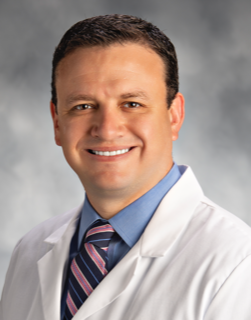
Your surgeon
Joshua Vrabec, MD
For more than 25 years, Dr. Vrabec has helped patients see clearly by demanding the very best from himself and his team. Every surgery is performed by Dr. Vrabec, supported by our optometric team who help co-manage your care before and after — guided by one principle: the right procedure and the right lens for the right patient, or no procedure at all.
- Castle Connolly Top Doctor
- Board-Certified Ophthalmologist
- 25+ Years of Experience
- Private, Accredited On-Site Surgery Suite
“Care and friendliness are excellent! I am back to 20/20 at the age of 73 and loving it! Thank you Dr. Vrabec and staff!”
“YOU MUST COME HERE for vision needs! … Within a week, I went from blinding vision to cataract removal and intraocular lens placement that has resulted in 20/20 vision. Don’t hesitate to make an appointment. 10 stars!”
“I could not be happier or more excited about the results of my cataract surgery. Dr. Vrabec listened very carefully to my needs. We had an extra consult just to make sure that we were getting the correct lens for me, and he was professional and kind through the entire experience.”
From our verified Google reviews.
Good to know
Cataract & lens questions, answered
What lens options do you offer?
Cataract surgery replaces your clouded natural lens with a clear artificial one, and the lens you choose sets your range of vision. Most patients choose vision correction — advanced lenses that reduce your dependence on glasses. Depending on your goals, that means an advanced monofocal (TECNIS Eyhance) for sharper distance, a multifocal IOL (Envy™, Odyssey™) or EDOF lens (PureSee™) for a full range of vision, or the Light Adjustable Lens, which we fine-tune after surgery. We also offer standard cataract surgery with a monofocal lens and low-level astigmatism correction (LRI) — all the benefits of surgery with Dr. Vrabec, for patients happy to keep wearing glasses. Your comprehensive evaluation confirms which is the right fit for your eyes.
Will I still need glasses?
It depends on the lens you choose. With a basic single-distance (standard monofocal) lens, plan on wearing glasses — about two-thirds of patients need them only for intermediate and reading, while the rest rely on glasses more of the time, including for distance. With an advanced vision-correction lens, most patients become far less dependent on glasses across distance and mid-range tasks like driving, the dashboard, and the computer. For the very smallest print, you may still want light reading glasses. Your consult will set realistic expectations for your eyes.
What’s the difference between a standard lens and an advanced lens?
A basic monofocal lens focuses at just one distance, so you’ll typically wear glasses for everything else — it’s the default most offices fit. It also doesn’t correct astigmatism, so you may not get any range fully in focus without glasses — a basic lens leaves part of your result to chance. Advanced vision-correction lenses extend your range so more of daily life stays in focus, correct astigmatism, and reduce your dependence on glasses. At your evaluation we recommend the specific lens that best fits your eyes and goals.
Does Medicare or insurance cover this?
Insurance covers removing the cataract and a basic lens that doesn’t fully correct most prescriptions — correcting your prescription, which determines how well you actually see, is out-of-pocket. Standard cataract surgery with a monofocal lens and low-level astigmatism correction (LRI) is $1,100/eye out-of-pocket; vision correction with advanced lenses ranges $3,000–$7,000/eye, depending on your goals and the technology. Your initial comprehensive eye evaluation is billed to your medical insurance (or $300 if you prefer to self-pay). Many patients use HSA/FSA funds and 0% APR financing for 24 months for qualified borrowers, with additional options available by phone.
How much does it cost?
Standard cataract surgery with a monofocal lens and low-level astigmatism correction (LRI) is $1,100/eye. Vision correction with advanced lenses ranges $3,000–$7,000/eye, depending on your goals and the technology. Insurance covers removing the cataract and a basic lens that doesn’t fully correct most prescriptions; these out-of-pocket amounts cover correcting your prescription. Your initial comprehensive eye evaluation — a thorough 1.5–2 hour assessment — is billed to your insurance, or $300 self-pay, where we also review financing (0% APR for 24 months for qualified borrowers; additional options by phone) and HSA/FSA eligibility.
What if I want to use only my insurance and pay nothing out of pocket?
We understand — and we’re honest about how we work. The Clear Vision way is outcome-focused: we don’t cut corners simply to comply with insurance coverage when we feel it would compromise your result. A fully insurance-covered procedure with no out-of-pocket cost is available at many hospitals and ambulatory surgery centers (ASCs), and we’re glad to recommend an office that can provide it. It simply isn’t our process — our focus is your best possible vision, not the cheapest path through it.
What is the procedure and recovery like?
Cataract surgery is performed in our private, accredited on-site suite, one eye at a time, with numbing drops and relaxing medication (no IVs) — most procedures take only minutes. Many patients notice clearer vision within days. Your care team will review exactly what to expect at your consult.
Take the first step
See if you’re a candidate for vision correction with cataract surgery
Check your candidacy in about 60 seconds, or call to speak with our team. Your first visit is a comprehensive 1.5–2 hour evaluation of your eyes — billed to your insurance, or $300. No pressure to proceed.